Overview
Next.js 15 has been released. In this post, I'll go over what changed in Next.js 15 and apply it to my blog.
Another one already? 🫨
What's New
After two RC (Release Candidate) versions, posted back in February and October, the stable version 15 of Next has officially been released. Let's take a look at a few of the changes.
Upgrading Smoothly with the @next/codemod CLI
With Next.js 15, you can now automatically transform your codebase using the @next/codemod CLI.
npx @next/codemod@canary upgrade latestWith a command like the one above, you can upgrade your codebase to the latest stable version or a pre-release version.
Async Request APIs (Breaking Change)
In the traditional SSR model, the server waits for the request before rendering any content. But not every component depends on request data, so this waiting is unnecessary. Ideally, the server should finish all the preparation it can before the request arrives. To do that, we need to know when to wait for the request.
That's why the data that depends on a specific request (headers, cookies, params, searchParams) needs to become async APIs.
With the @next/codemod CLI we just saw, you can migrate your codebase easily.
npx @next/codemod@canary next-async-request-api .When you run the code changes through that CLI, the code is transformed like this:
// as-is
export async function generateMetadata({
  params,
}: {
  params: { slug: string };
}): Promise<Metadata | undefined> {
  // params await 없이 사용
  const post = getAllPosts().find((post) => post.slug === params.slug);
  // ...
}

//to-be
export async function generateMetadata(props: {
  params: Promise<{ slug: string }>;
}): Promise<Metadata | undefined> {
  const { slug } = await props.params;
  const post = getAllPosts().find((post) => post.slug === params.slug);
  // ...
}
Caching Semantics
Next's App Router uses caching by default for the best performance, and you can opt out when you need to.
In version 15, GET route handlers and the client router cache are no longer cached by default.
GET route handlers are no longer cached by default.
In Next 14, route handlers using the GET method were cached by default, even when they used dynamic functions and dynamic options.
Now in version 15, GET route handlers are not cached by default.
If you want caching, you can opt in with the static route config export dynamic = "force-static".
Handlers related to metadata files (sitemap.ts, opengraph-image ...) are still cached.
The client router cache no longer caches page components by default.
Next 14.2 added the staleTimes flag for the router cache.
In Next 15, that flag still works, but its default behavior has changed to 0.
When you move around the app, the client activated through navigation always reflects the latest data from the page components.
That said, there are some important behaviors that stay the same:
- Shared layout data is not refetched from the server, and partial rendering is supported.
- Back/forward navigation uses the cache so the browser can preserve the scroll position.
loading.jsis cached for 5 minutes.
You can control the client router cache behavior through next.config:
const nextConfig = {
  experimental: {
    staleTimes: {
      dynamic: 30,
    },
  },
};

export default nextConfig;
React 19
React 19 is still in RC, but the Next team worked closely with the React team and got their confidence in React 19's stability, so Next 15 is being released with React 19 applied.
React Compiler (Experimental)
The React Compiler is an experimental compiler for React that automatically handles the work of manual memoization (useMemo, useCallback).
npm install babel-plugin-react-compilerconst nextConfig = {
experimental: {
reactCompiler: true,
},
};
export default nextConfig;To use the React Compiler, you need to install a Babel plugin. This can lead to slower dev environments and build times.
Turbopack Dev
next dev --turbo is now stable and offers a fast development experience.
Here are the results from applying it to my actual blog project:
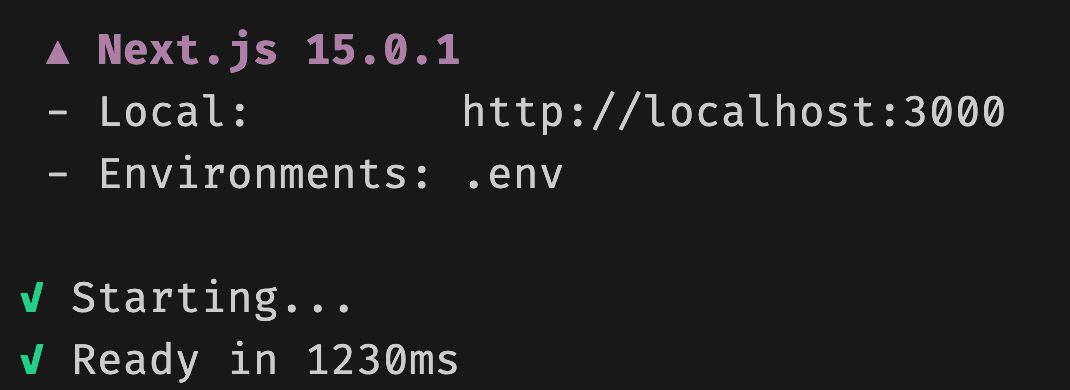
as-is Build time without Turbopack
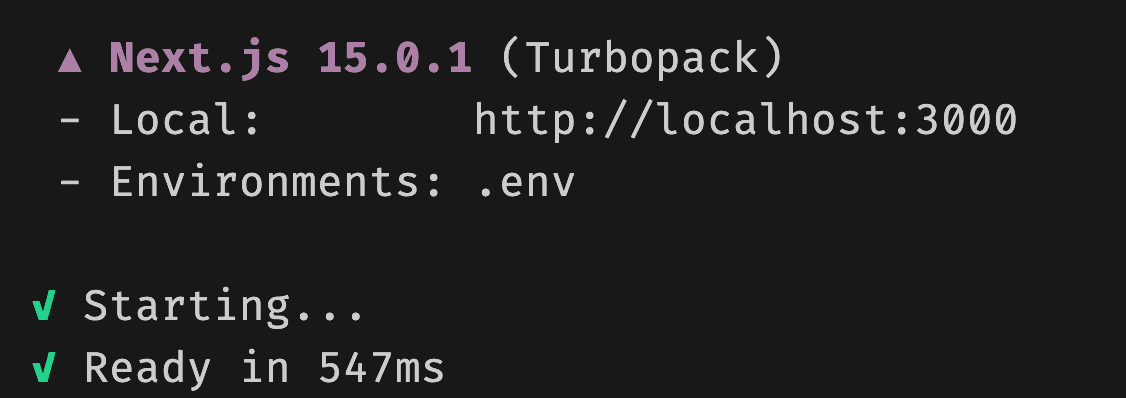
to-be Build time with Turbopack
After applying it to my blog, the build time went from 1230ms -> 547ms, which cut it roughly in half.
Static Route Indicator
In the development environment, Next 15 provides a static route indicator. With this indicator, you can tell whether each route is static or dynamic.

Improved Security for Server Actions (Functions)
Server Actions are server-side functions that can be called directly from the client.
They're defined in files with the use server directive and used as async functions.
Even if a Server Action or utility function isn't important, that code publicly exposes an HTTP endpoint. This behavior is technically correct, but it can lead to a function being exposed unintentionally.
To improve security, the following changes were made:
- Dead code elimination: The IDs of unused Server Actions are not exposed in the client JavaScript bundle, which reduces bundle size and improves performance.
- Secure action IDs: Next creates unguessable, non-deterministic IDs so that Server Actions can be referenced and called from the client.
Development and Build Improvements
Server Components HMR
In development, Server Components are re-executed on save. This means fetch calls and third-party services get called again too.
To reduce dev performance costs and API call costs, HMR now makes sure it can reuse fetch responses from the previous render.
Faster Static Generation for the App Router
This optimizes build time for static generation when you have slow network requests.
The previous approach needed two renders: one to generate data for client-side navigation, and another to render HTML on the initial page visit. Now the first render is reused, which cuts down the workload and build time.
Additionally, static generation workers share the fetch cache across pages.
This prevents the same data from being requested multiple times.
Enhanced Static Generation Control (Experimental)
There are also new experimental options for controlling static generation across different use cases.
The Next team says these can cause extra resource usage and memory leaks, so they recommend sticking with the default settings unless you have specific requirements.
const nextConfig = {
  experimental: {
    // 넥스트가 실패한 정적 페이지를 몇 번 재시도할 것인지
    // 빌드 실패 전
    staticGenerationRetryCount: 1
    // 워커 당 처리할 최대 페이지 수
    staticGenerationMaxConcurrency: 8
    // 새로운 워커가 돌기 전에 각 워커가 처리할 최소 페이지 수
    staticGenerationMinPagesPerWorker: 25
  },
}

export default nextConfig;
For other changes beyond these, you can check the release notes on the official blog.